Stefano Puntoni
Partnership with Wharton Business School
Sebastian S. Kresge Professor of Marketing, The Wharton School; Co-director, Wharton Human-AI Research

Companies now let AI answer customers and make some decisions on its own, but many employees and customers aren’t sure they can trust it. Stefano Puntoni, a behavioral scientist who co-authors the yearly Wharton-GBK AI Adoption Report, argues that whether AI pays off depends on how people respond to it. He shows audiences how far to trust AI, and how to use it to make money as well as save it.
Stefano Puntoni studies how employees and customers respond to AI. Employees who feel AI threatens work they are proud of tend to hold back. He argues that people have more reason to back AI when the company uses it to grow, not only to cut costs. Some customers have started sending an AI agent to shop for them, and those agents have biases of their own.
He turned his research to AI around 2014. Companies send their people to learn from him in Wharton’s executive programs, including one on accountable AI. Since he joined Wharton from Europe in 2022, he has won its Teaching Excellence Award every year. The Wharton-GBK report he co-authors surveys around 1,000 senior decision-makers at large U.S. companies. He has spoken at South by Southwest, LinkedIn Talent Connect, and Talks at Google.
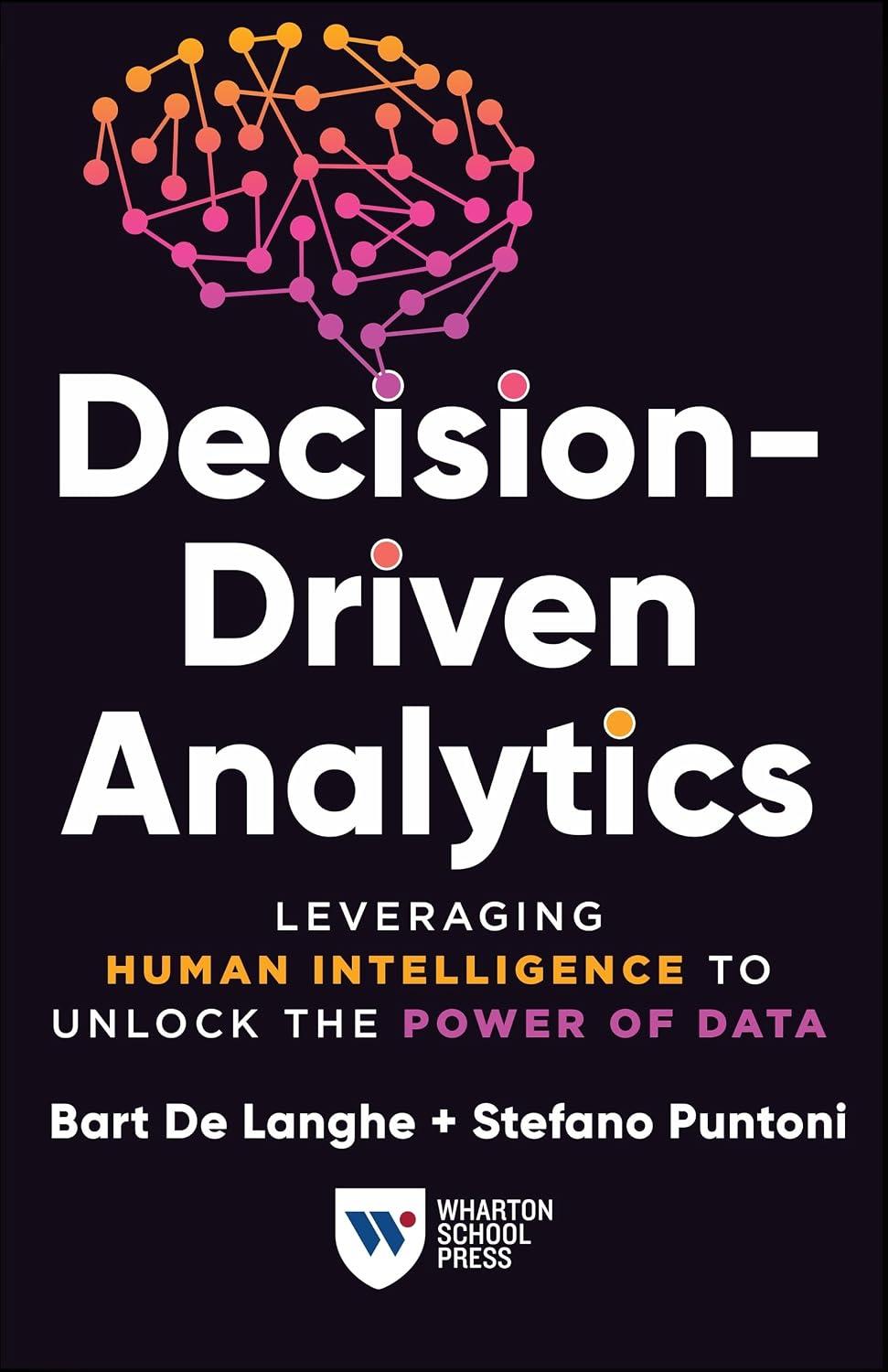
He and Bart De Langhe wrote the 2024 book Decision-Driven Analytics. It teaches managers and analysts to put the decision first and work back to the data that decision needs.
For employees who feel decisions about AI are being made over their heads, he shows where their expertise still counts and how to build on it. Marketing and service teams learn how customers react when a machine makes the call, and how far to rely on AI-simulated customers in market research. Anyone putting AI agents to work finds out which decisions to leave to them.
WHY AUDIENCES WILL BE BETTER OFF
- Audiences leave able to tell an AI plan that only cuts costs from one that grows the business, and to make the case for growth.
- Audiences leave knowing why people resist giving AI the work they identify with, and how to bring them on board.
- Audiences leave able to judge when AI has earned their trust, and when a person still has to own the call.
- Audiences leave able to build AI around the expertise their people already have.
- Audiences leave able to hand AI the busywork while keeping the effort that builds skill.
- Audiences leave able to start a data project from the decision it has to inform.
- Audiences leave knowing what changes when AI serves their customers, shops for them, or stands in for them in research.
Featured Videos


Stefano Puntoni
Speaker Reel
Stefano Puntoni’s Speech Topics
AI for Growth: Why Cutting Costs Is the Smaller Prize
Many AI programs stop at cutting costs, and costs can only fall so far. Puntoni and his co-authors call this the growth blind spot. Their June 2026 Harvard Business Review article backs it with marketing experiments and a valuation model. He asks audiences what AI would let them offer for the first time, such as expert advice in finance, health, or law for people who once couldn’t afford it. Then he helps them build the case for funding it.
The Human Side of AI: Getting Your Workforce Behind It
AI can feel more threatening than earlier technologies, in Puntoni’s view, because it goes after expertise people spent years building. In a study he co-authored, people preferred that a coworker be replaced by another person instead of a robot. When the job at risk was their own, they preferred the robot. When AI threatens work people see as part of who they are, some push back, and others retrain or move toward the parts of the job AI cannot yet do. His advice is to give every AI rollout a people plan as detailed as the technical one, and to bring employees in before the plan is set.
Who’s in Control? Trusting AI That Acts on Its Own
Some AI agents already make purchases and decisions without waiting for a person’s approval. The systems behind them are not always well understood, even by the people who build them. Puntoni says AI should earn trust step by step, as a system proves itself reliable and safe. He also warns that in a crisis, automated systems can hand control back to people whose skills have faded from lack of practice. He helps audiences decide how much control to give AI, and where a person has to answer for the outcome.
Carbon and Silicon: Combining Human and Artificial Intelligence in Organizations
Puntoni starts from what experienced people already know and asks how AI can be built around it. He lays out how to decide which tasks stay with people and which go to machines. He also wants organizations to show their people how AI can make their jobs better.
Will AI Make Us Smarter or Dumber?
Every job has its friction, Puntoni says, and not all of it should go. AI is very good at clearing away busywork. It also tempts people to hand over the effort that builds skill, and the two can be hard to tell apart. In the 2025 Wharton-GBK AI Adoption Report, 43 percent of senior decision-makers flagged the risk that AI erodes their people’s skills. Puntoni’s answer is to decide first which effort is worth keeping, then give AI the rest.
What Sets AI Winners Apart: Lessons From the Wharton-GBK AI Adoption Report
As AI budgets grow, organizations want to know whether they are falling behind and whether the spending is worth it. Each year the report tracks how large U.S. companies use generative AI, what they spend, and what return they report. Puntoni walks the room through the newest edition, so attendees can compare their own company with its peers before setting the next AI budget.
Decision-Driven Analytics: When the Data You Have Isn’t the Data You Need
Companies often start with the data they already have and go looking for something useful in it. In their 2024 book, Puntoni and Bart De Langhe reverse that order. A team begins with the decision and the questions it raises, and only then turns to the data. Say the decision is which customers get a retention offer. A typical churn model can flag the customers most likely to leave. It can’t say which ones the offer would keep, and those may be different people. The book calls analysts “divers,” who love going deep into data, and managers “runners,” who need quick answers. It asks each side to value what the other does, and Puntoni gets both to agree on the decision first, then work out together which data could change it.
Synthetic Customers: How AI Is Changing Market Research
Companies are asking AI to play the part of their customers. These synthetic customers can answer research questions in hours and react to new product ideas, and sales teams can rehearse a pitch with them. Puntoni co-wrote a 2025 Harvard Business Review article on synthetic customers. He explains where they fall short and when a company still needs to hear from real customers.
When Your Customer Is a Bot: Agentic Shopping and Bot Psychology
More consumers are starting to leave buying decisions to AI agents. Puntoni studies what he calls bot psychology, the way these agents weigh products and brands. In his research, the agents show clear biases. They tend to tell users what they want to hear and to favor whatever confirms a first guess. An agent that keeps agreeing with a shopper can lock in the brand the shopper already had in mind. He takes marketers through what makes an agent choose their brand, and what happens to brand loyalty when an agent does the buying.
AI on the Front Line: How Customers React When a Machine Serves Them
At many companies, much of the contact with customers now runs through AI. A chatbot takes complaints, and software approves loans and refunds. Puntoni and colleagues found that customers were less pleased by an approval when an algorithm made the call, while a rejection stung about the same either way. He shows service teams why a person’s role in a decision may matter most when the answer is yes.
What other organizations say about Stefano Puntoni
Stefano was able to bring across valuable theory with a healthy dose of pragmatism.
Technology
Featured News
Harvard Business Review
Companies Are Using AI for Efficiency. They Should Use It to Grow.
1 June, 2026
Works by Stefano Puntoni
As an Amazon Associate WSB earns from qualifying purchases.
Bring This Speaker to Your Stage
Tell us about your event and our team will confirm availability and fees right away.