Ravin Jesuthasan
Futurist and Author on the Future of Work, Automation, and Human Capital
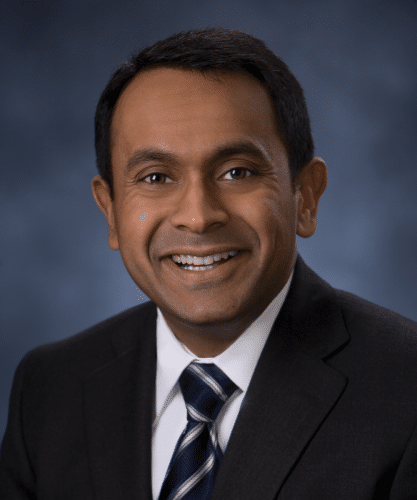
Ravin Jesuthasan is a recognized futurist, global thought leader and author on the future of work and human capital. He has led multiple research efforts on the global workforce, the emerging digital economy, the rise of artificial intelligence and the transformation of work.
$40K - $70K
Ravin Jesuthasan is a recognized global thought leader, futurist, and bestselling author on the future of work, AI, and workforce transformation. He works with some of the largest, most sophisticated organizations in the world on the transformation of work and the workforce. Ravin has led numerous research projects for the World Economic Forum including its ground-breaking studies; Shaping the Future Implications of Digital Media for Society, Creating a Shared Vision for Talent in the 4th Industrial Revolution, HR 4.0: Shaping People Strategies in the 4th Industrial Revolution and Human Capital as an Asset: An Accounting Framework for to Reset the Value of Talent in the New World of Work. He is a regular participant and presenter at the World Economic Forum’s annual meeting in Davos and is a member of the forum’s Steering Committee on Work and Employment and its Future Skills Alliance.
Ravin has been a featured speaker on the aforementioned topics at major conferences around the world. He is a regular keynote speaker at global events like the Milken Institute Global Conference, Horassis Global conference, MIT’s Emtech Next conference, The QSP Summit in Porto, Gartner’s Reimagine, HR Tech in Las Vegas, the World AI Summit, C2 in Montreal, Beyond HR in Amsterdam and the Peryon People Management Summit in Istanbul among others.
He has also been featured and quoted extensively by leading business media including CNN, BBC, The Wall Street Journal, BusinessWeek, CNBC, Fortune, FT, The Nikkei (Japan), Les Echoes (France), De Telegraaf (Netherlands), Valor Economico (Brazil), Business Times (Malaysia), Globe and Mail (Canada), South China Morning Post, Dubai One TV and The Australian among others. Ravin was also an advisor to and featured prominently on PBS’s widely acclaimed documentary series The Future of Work. Ravin is a frequent guest lecturer at universities around the world including Caltech, Oxford University, Northwestern University, New York University and the University of Southern California. Ravin is a member of the faculty at Caltech.
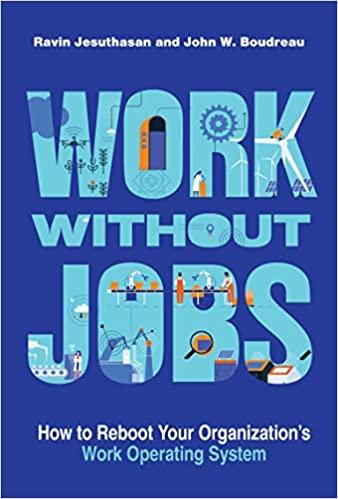
Ravin was named one of the leading management thinkers by Thinkers 50. He has also been recognized as one of the top 25 most influential consultants in the world by Consulting Magazine, one of the top 8 future of work influencers by Tech News and one of the top 100 HR influencers by HR Executive. He is the author of 6 books including the Wall Street Journal and Amazon number one bestseller; Work Without Jobs: How to Reboot Your Organization’s Work Operating System (MIT Press, 2022), which was also named business book of the year in 2023.
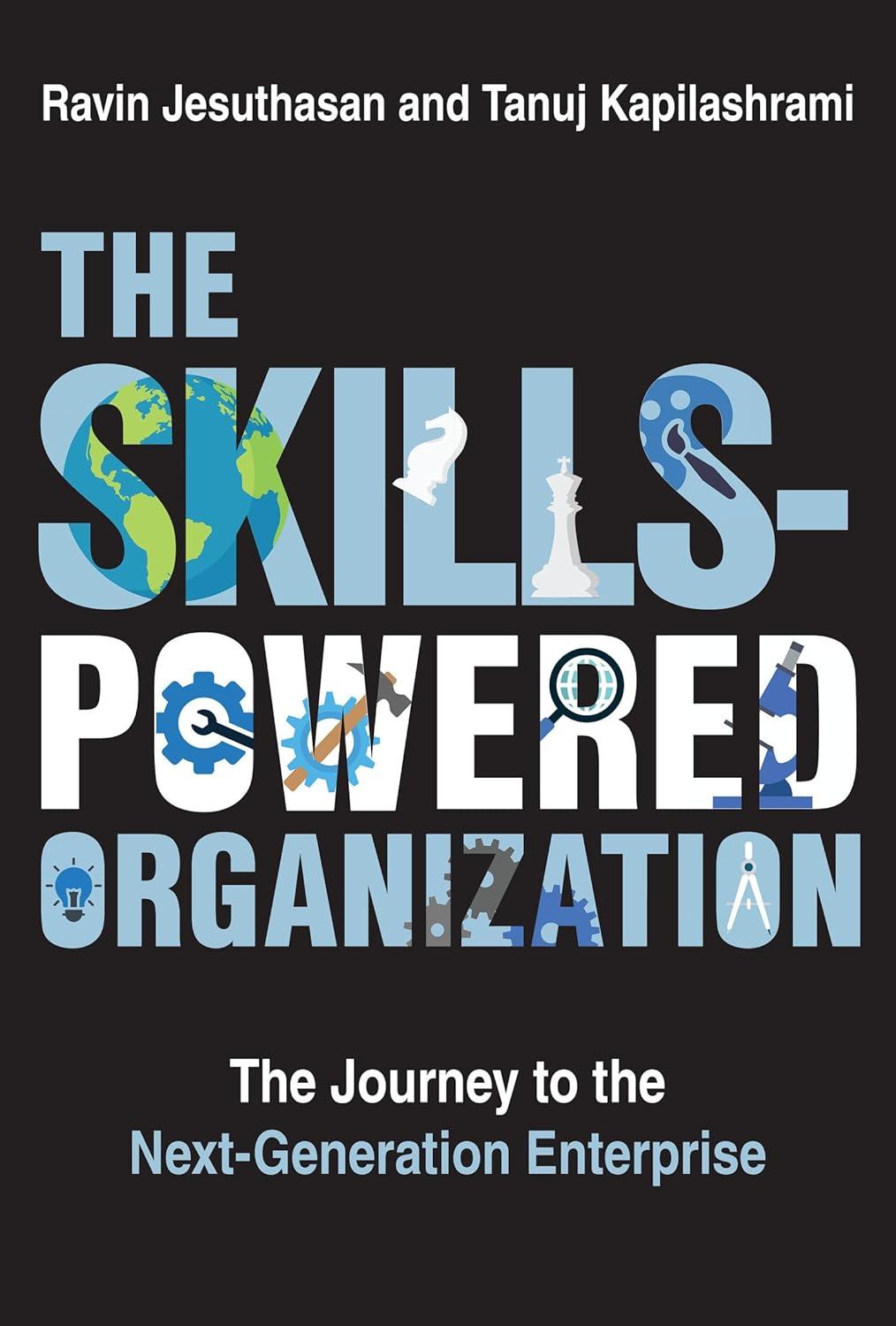
His most recent book is The Skills-Powered Organization: The Journey to the Next Generation Enterprise (MIT Press, 2024) which was an Amazon number one bestseller and the FT’s Book of the Month in October 2024. Ravin has authored over 250 articles including 15 for the Harvard Business Review and the Sloan Management Review.
Featured Videos

Ravin Jesuthasan
MIT Technology Review
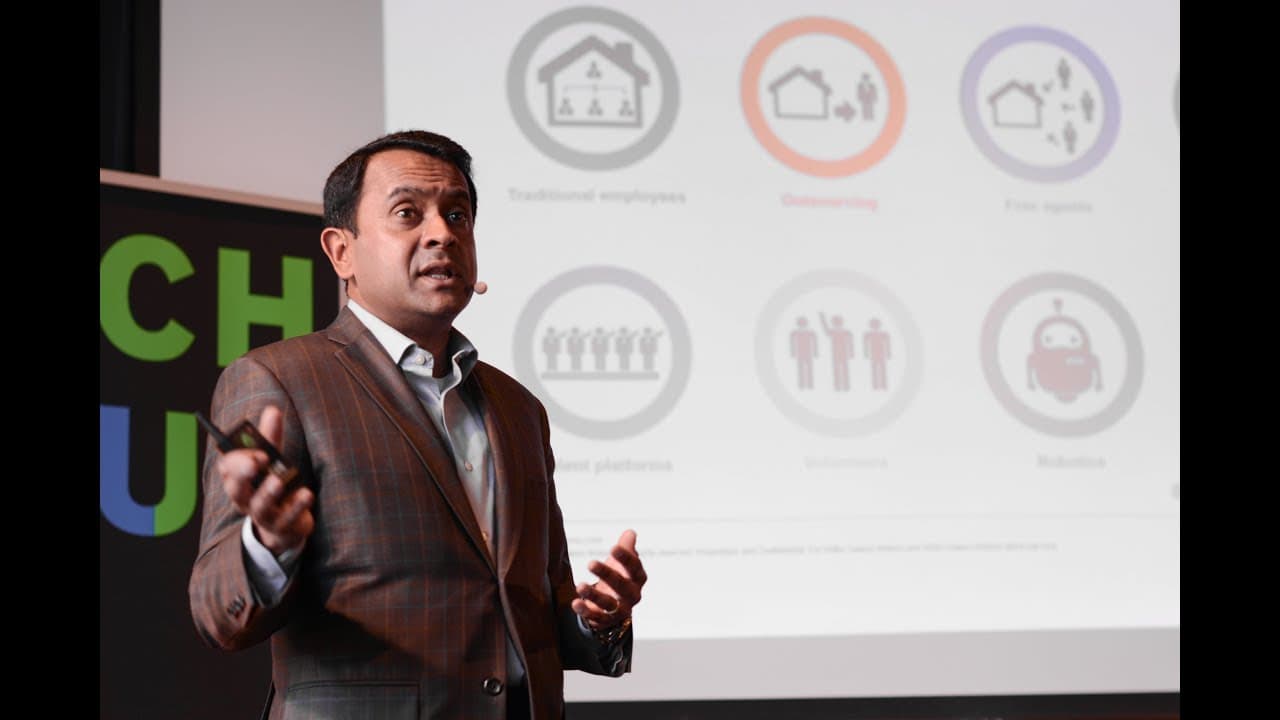
Ravin Jesuthasan’s Speech Topics
AI and Human Capital - Shaping the Future
Your organization has made the decision to adopt automation and artificial intelligence technologies. Now, you face difficult and stubborn questions about how to implement that decision: How, when, and where should we apply automation in our organization? Is it a stark choice between humans versus machines? How do we stay on top of these technological trends as work and automation continue to evolve?
We need to recognize that we as individuals will need to reinvent ourselves. Our children will need to reinvent themselves three or four times during their careers. Automation is here, but it doesn’t mean it’s replacing employees.
Artificial Intelligence is not replacing human skills. In fact, nearly half of transforming organizations are using automation to create new types of work for humans. Employers also report automation requires them to pay more for employees with certain skill sets.
Employers need to ensure employees stay relevant. Forget just competitive pay—employees want employers to make sure their skills are useful and relevant, especially as the workplace evolves. Recognize that learning and development are the new centerpieces of the employee experience.
HR 4.0
The key strategies for business leaders and human resource executives to manage people and work in the Fourth Industrial Revolution.
The keynote is based on the study, HR 4.0: Shaping People Strategies in the Fourth Industrial Revolution (4IR), which was conducted in partnership with the World Economic Forum, Saudi Aramco, Unilever and Willis Towers Watson. It draws upon a series of consultations with select chief human resources officers and experts to identify emerging challenges arising from the future of work and a range of potential interventions to address them.
According to the study, the 4IR is blurring the lines between people and technology, fusing the physical, digital and biological worlds. The impact of these changes on the way people work and the way businesses produce value will span all industries, economies and societies and redefine the future of work. The study indicates businesses and governments must adapt to these changes and support the workforce transition. If managed well, the future of work may be one where many more people are able to fulfil their full potential.
The study identifies six imperatives that business leaders, partnering with their human resources counterparts, will need to implement to successfully meet future challenges:
- Developing new leadership capabilities for the 4IR
- Managing the integration of technology in the workplace
- Enhancing the employee experience
- Building an agile and personalized learning culture
- Establishing metrics for valuing human capital
- Embedding inclusion and diversity
Creating a Shared Vision for Talent in the 4th Industrial Revolution
In the midst of the fourth industrial revolution, which is characterised by swift and unexpected change across economies and labour markets, a new shared vision for talent is needed to ensure current and future social mobility.
Understanding and meeting emerging skills demand and empowering individuals to learn, unlearn and relearn skills will need to form the basis of a new learning and working ecosystem – a shared vision for talent. The broad change that will be required in this new world of learning and work is to move away from traditional, front-loaded accreditation and siloed certificates to a system of lifelong learning infused with a shared set of skills-based indicators at its core.
Such a system demands a common currency – one that can recognise, certify, reward and enhance skills, and create a common framework among individuals and national, sectoral and workplace actors. For individuals, it holds the promise of professional fulfilment and the opportunity for continued relevance in the changing world of work. Companies can expect to see efficiencies in sourcing and managing talent, while governments can expect more efficient labour markets, combined with the ability to more precisely provide education, retraining and income security support to those who need it.
Sustainable Digital Transformation and the Role of the Chief People Officer
Curiosity and the drive to learn are going to be the most critical skills as the HR profession is on the edge of entering a demanding Fourth Industrial Revolution. As the traditional role of a Chief Human Resource Officer undergoes a transformation and turns into a Chief People Officer, with the convergence of technology, machines and humans, workplaces will soon hire Chief People and Machine Officers and Chiefs of Work. Increasingly this profession needs to shift from being a steward of employment to being a steward of work.
The biggest challenge is legacy – legacy of culture, mindset, leadership routines, behaviors, toolset, etc. At the heart of this transformation is that an increasing number of large enterprises are embracing agile and a growth mindset to counteract this legacy. They are starting to transform their core DNA.
As organizations operate more distributed business models, leaders will need to lead from the edges, adopt the right technologies, drive a new vision of organizational culture and shape innovative people strategies.
The Future of Work
The fourth industrial revolution has arrived, heralding a transformative change in work with widespread consequences for companies and individuals. Is your organization prepared?
As technology continues its inexorable advance, will we see the continued empowerment and enablement of the individual? Will we see the decline of the organization as the primary means for organizing work?
It is time to separate fact from fiction and embark on a journey to understand the why, what and how behind the future of work.
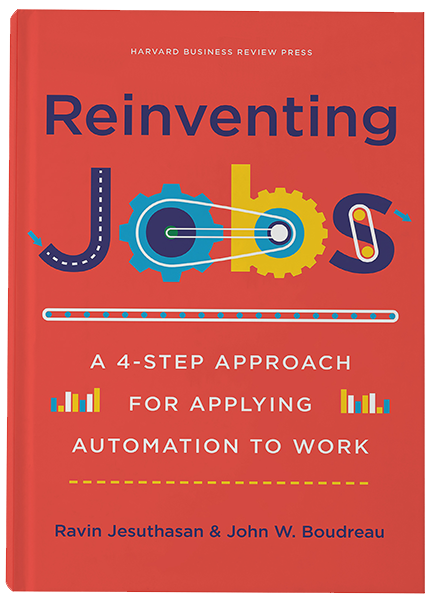
Reinventing Jobs - A 4-Step Approach For Applying Automation
Gain a practical understanding of what the future of work will really look like, and how it will impact organizations as they seek growth and success in an era of change and digital transformation. More importantly, this keynote session will help you understand how leaders can guide this change within their own organizations and will provide you with a framework that will help leaders responsibly apply automation to achieve a sustainable combination of humans and machines.
The practical four-step framework – deconstruct, optimize, automate, and reconfigure – will enable you and others throughout your organization to collaborate to proactively and continuously “reinvent” work and create optimal human-machine combinations.
Based on groundbreaking primary research, numerous examples and practical advice for applying the four-step process, this keynote gives leaders a more precise, planful, and actionable way to decide how, when, and where to apply and optimize work automation.
Learning – Powering The Journey Of Perpetual Reinvention
New ways of working, digitalization, emerging automation options and new ways of organizing work are shrinking the half-life of many, particularly technical, skills while increasing the premium on many “soft” skills like critical thinking, problem solving, teamwork and collaboration. Countless professions that used to guarantee a good income based on earning the relevant technical degree and incrementally upskilling over a 30 year career are being disrupted exponentially such that the shelf life of such degrees is increasingly less than 10 years.
You can’t achieve reinvention without learning and in many cases unlearning or relearning. You simply can’t separate learning from the process of reinvention, just as you can’t separate learning from living. Life itself is about a continuous set of new experiences that transform us every day. If we don’t continually seek these experiences out, we cease to truly live.
Growth is learning put into action. Any type of progress requires a variety of learning elements. You can’t have a growth mindset or a culture that embraces curiosity without understanding the importance of learning. Transformation is the result of our learning, unlearning and relearning journeys.
How your organization creates and sustains a culture of continuous learning and growth will be essential to ensuring its continued relevance.
Works by Ravin Jesuthasan
Ravin Jesuthasan
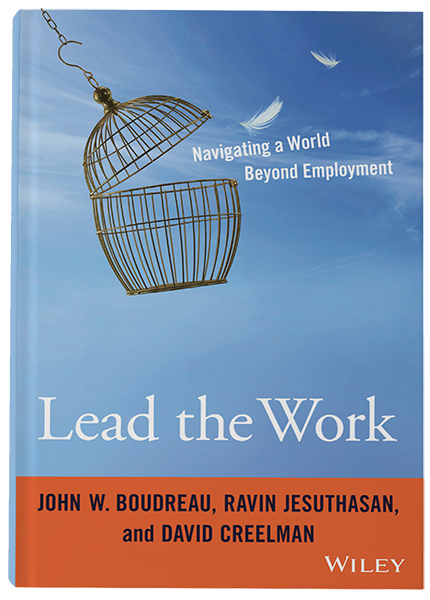
Lead the Work: Navigating a World Beyond Employment
As an Amazon Associate WSB earns from qualifying purchases.
Bring This Speaker to Your Stage
Tell us about your event and our team will confirm availability and fees right away.