Peter Fader
Partnership with Wharton Business School
Frances and Pei-Yuan Chia Professor of Marketing, The Wharton School; Co-founder of Zodiac, Theta, and Incompass Labs


A small group of customers carries most of your business. Peter Fader proved that, and he now argues the same is true of your people. He shows you exactly who they are and where the next dollar belongs, so your money follows the handful who actually drive your growth.
Web
Ask a company what its best customer is worth and you get a shrug, or a number nobody in the room trusts. Ask which of its people actually carry the business and you get a debate. Peter Fader has spent nearly forty years turning answers like those from opinion into arithmetic.
Fader turned customer lifetime value from an idea into something a company could calculate. His research showed that what a customer does predicts their future value far better than who they are, and that transaction history beats demographic profiles almost every time. He published that model in 2005, then co-founded Zodiac in 2015 to put it to work. Nike became a client, then bought the company outright. Most vendors get renewed. Zodiac got bought.
He keeps aiming the same discipline at harder targets. Theta applies customer-based corporate valuation, the method his research established and Harvard Business Review published. It prices a company through the behavior of its customers rather than the income statement alone, and investors pay to use it. Incompass Labs turns that thinking on employees, testing whether the qualities a company says it values separate its strongest performers from everyone else.
His ideas have been tested where the answers carry consequences. He has run this work inside retail, grocery, gaming, insurance, restaurant chains, and professional sports. He holds the Frances and Pei-Yuan Chia chair at Wharton and trained at MIT. The American Marketing Association gave him the Charles Coolidge Parlin Award, its highest career honor in marketing research. His three books moved customer lifetime value out of the marketing department and into strategy.
Technology has now caught up to his argument, which is what makes this year different from last. Serious money is moving into AI, and Fader is unusually direct about what actually pays. Start with the customer data already in the systems, where, as he puts it, you can bake a very good cake with boring data. Find what drives value there, then let the technology multiply something real. He is funny, blunt, and honest about his own work, including the years after the Nike acquisition when his models got pushed further than he would have taken them. Audiences leave seeing an answer where they used to see a data problem.
WHY AUDIENCES WILL BE BETTER OFF
- Audiences leave able to put money behind the customers who return it, judged by what they did rather than who they are.
- Audiences leave able to find their next growth decision inside transaction records the company already owns, before spending on more data.
- Audiences leave able to test what their AI is being fed, because a flawed assumption gets expensive at scale.
- Audiences leave able to make the case for customer value in the language finance already uses, instead of the language marketing prefers.
- Audiences leave able to surface the strong performers their own reviews overlook, and to retire the values that distinguish nobody.
- Audiences leave able to name what is blocking the change in their own building, instead of blaming the analysis.
Featured Videos


Peter Fader
Speaker Reel


Peter Fader’s Speech Topics
Find the Customers Who Fund Your Growth
A small share of customers generates most of the value in a business, and the money rarely follows them. Fader shows audiences how to find them inside data the company already owns, using the method behind his most recent book. It exposes where acquisition money goes, which products get funded, what loyalty programs reward, and what sales incentives quietly protect. Audiences leave able to read their own customer base, tell durable growth from growth they have to buy again every year, and know what to change first.
Not All Data Is Fuel. Most AI Is Running on the Wrong Tank.
The rush to feed AI every signal available is, in Fader’s phrase, sprinting before we can crawl. Meanwhile the returns that come fastest are sitting in transaction records companies have ignored for years. Fader shows audiences what those records reveal about which customers matter, and the results a company can act on immediately. Then he shows where AI genuinely earns its keep, finding those patterns faster and more precisely than any team could alone. He is blunt about the traps, especially the customer personas companies invent and never test. Audiences leave knowing what belongs in the tank, what does not, and what their AI should pay back once it is fed properly.
What Your Best Customers Teach You About Your Best People
Fader made his name proving which customers are worth the most. He now aims the same math at the people inside the business. Ask two managers to name the strongest people on their team and you will often get two different lists, yet those judgments decide who gets hired, promoted, and let go. His work separates what a person delivers from how generous the reviewer happened to be, and tests whether the qualities a company says it values separate anyone at all. Audiences leave knowing how to find the high performers their reviews are burying, and which of their stated values are actually doing any work.
The Numbers Work. So Why Doesn’t Anything Change?
For thirty years, audiences have asked Fader the same question after his talks about the models: How do we actually get our company to do this? He admits he answered it badly for most of that time. The analysis was sound, the numbers were right, and the change still stalled somewhere between the insight and the incentives. His next book is the answer he owes those rooms, and it starts with what the companies that made the shift actually changed, including how they pay people. Audiences leave able to see where the change is stalling in their own building, and what to move first.
The One Number Finance and Marketing Can Share
Marketing argues for the brand, finance argues for the number, and the customer conversation stalls between them. Fader has spent his career refusing that split, and he says customer value should be as urgent in finance and accounting as it is in marketing. He gives both sides the same arithmetic: what each customer is likely to be worth, and what that makes the business worth. Theta, the firm he co-founded, prices companies exactly this way for investors. Audiences leave with one number both functions can defend, and a shared basis for where the next dollar goes.
What other organizations say about Peter Fader
Professor Peter Fader mesmerized the audience with his mind-blowing keynote on ‘How can Customer Centricity be profitable’. He called out why Cost per Acquisition is the wrong metric when evaluating Customer Acquisition efforts and how 'Value per Acquisition/CLV' is the metric that truly matters for effective Customer Acquisition strategies.
Technology
Featured News
Business of Fashion
How Retailers Can Effectively Target Fashion and Beauty Consumers
19 January, 2026
Works by Peter Fader

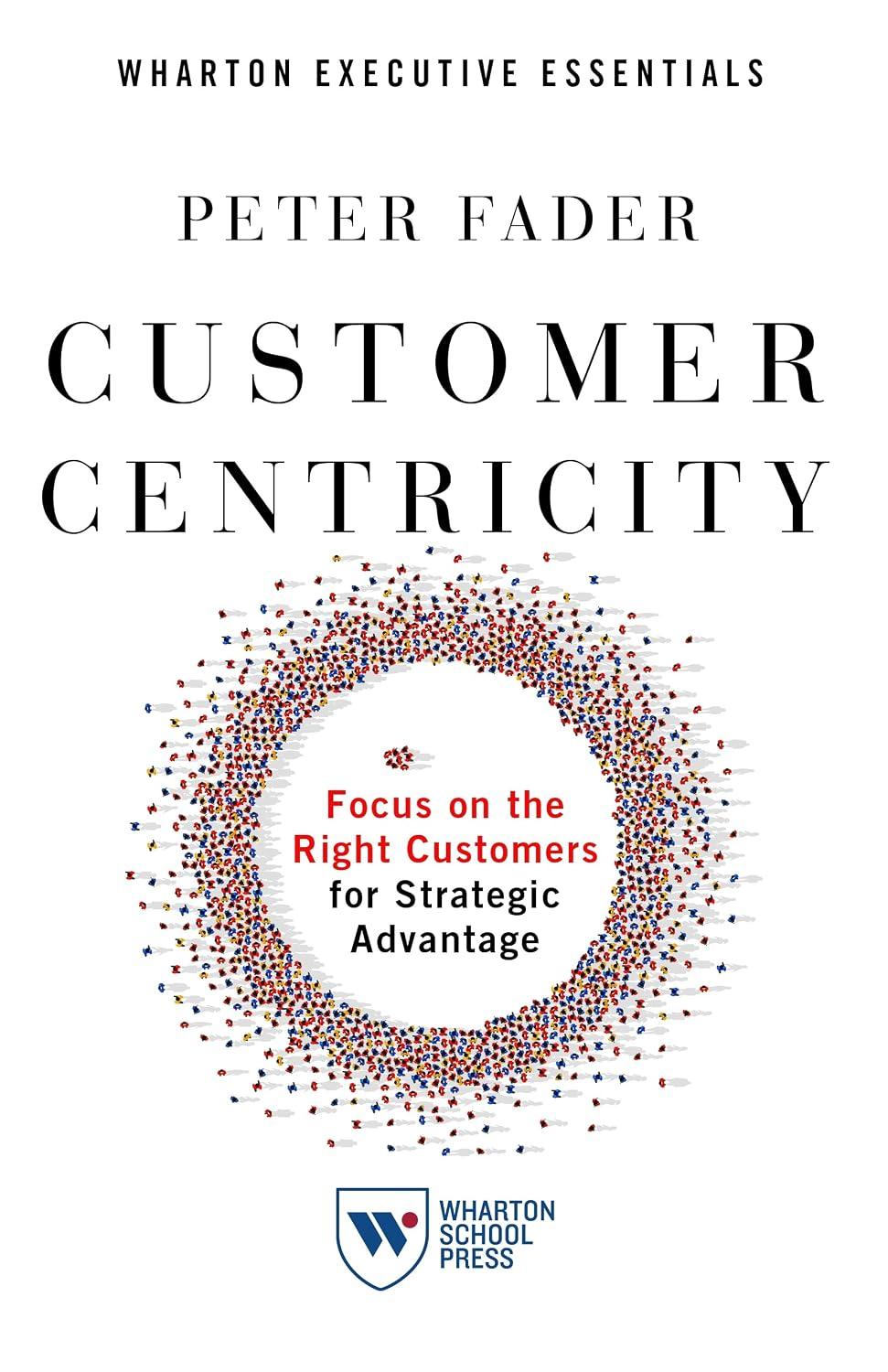
As an Amazon Associate WSB earns from qualifying purchases.
Bring This Speaker to Your Stage
Tell us about your event and our team will confirm availability and fees right away.