Maurice Schweitzer
Partnership with Wharton Business School
Cecilia Yen Koo Professor, The Wharton School, University of Pennsylvania; Faculty Director, Wharton Behavioral Lab; Co-author of Friend & Foe

Trust keeps clients loyal, deals profitable, and teams honest, and Maurice Schweitzer’s Wharton experiments show how it is built, kept, and won back. He shows audiences what to say and do when it is tested: the mistake, the hard decision, the tough negotiation, and the bad news a team is afraid to share. His experiments found that a kept promise wins back broken trust faster than an apology, and executives come to Wharton to learn decision-making in the program he leads.
Companies bring Maurice Schweitzer in when the conversations and decisions their people face are expensive to get wrong. He created Wharton’s Advanced Negotiation course, and he also works directly with corporate teams. For one pharmaceutical company, he ran a full day of live negotiations, from one-on-one deals to deals with several parties.
At the Wharton Behavioral Lab he directs, Schweitzer runs experiments on how people trust, decide, negotiate, and talk to each other. Take his research on questions: ask “What problems have come up?” instead of “Any problems?” and people are more likely to tell you what went wrong. On decisions, he found that anxious people rely more on advice and get worse at telling good advice from bad.
His talks cover trust, negotiation, decision-making, communication, ethics, and emotional intelligence, and many can be run as hands-on working sessions. They work for corporate all-hands meetings and sales teams, and for association, healthcare, and nonprofit audiences.
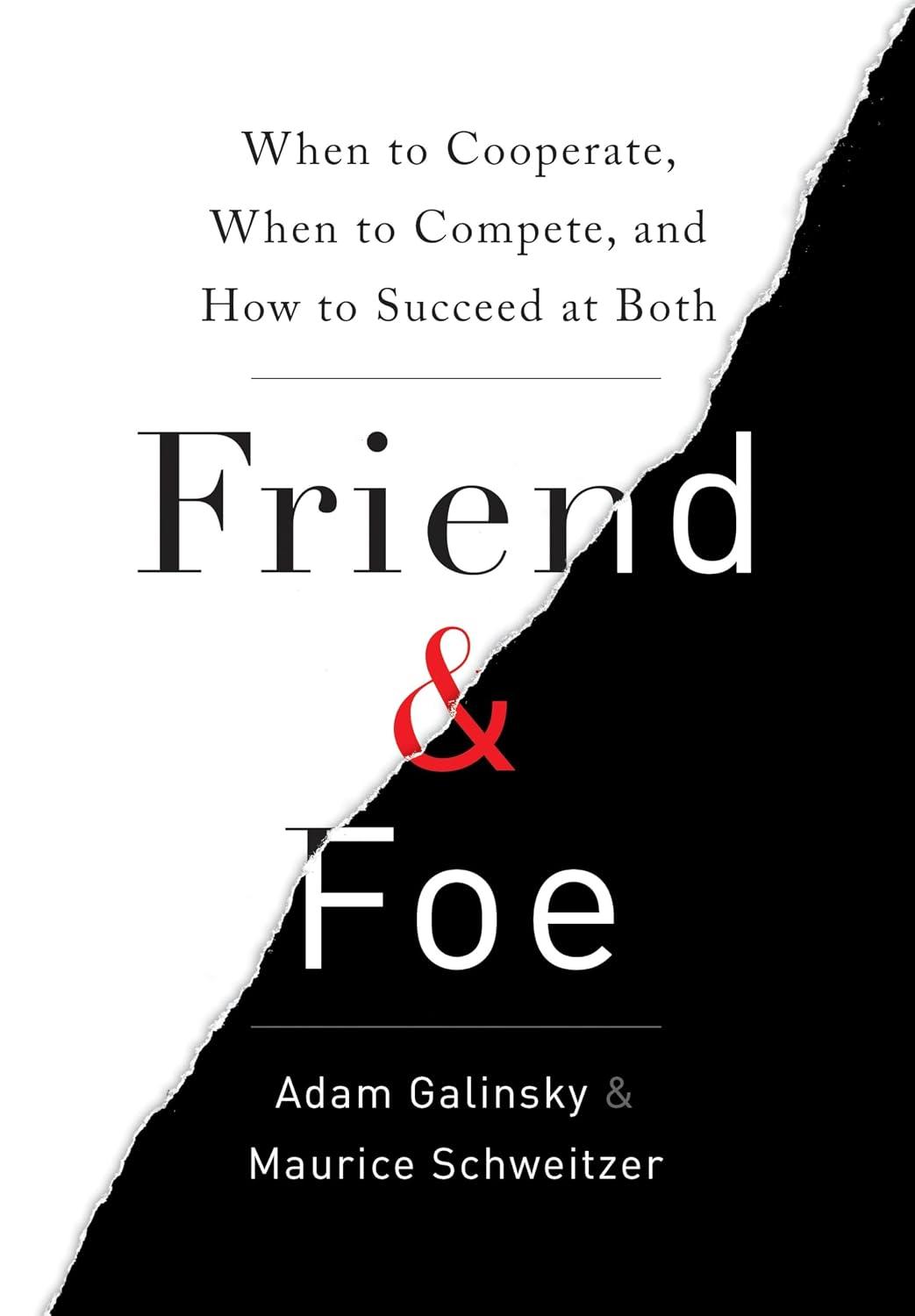
He has taught at Wharton since 1998, and he has won its Teaching Excellence Award four times since 2022. Nearly 200,000 people have enrolled in his online course on communication, and more than 2,000 reviewers rate it 4.7 out of 5. Harvard Business Review and Time have published his work, and Freakonomics Radio and Harvard’s Program on Negotiation have featured it. With Adam Galinsky, he wrote Friend & Foe, which his Wharton colleague Adam Grant called “a fascinating voyage through the science of cooperation and competition.”
WHY AUDIENCES WILL BE BETTER OFF
- Audiences leave knowing the first move to make after trust breaks and how to make the repair hold.
- Audiences leave with habits that catch costly mistakes before a decision is final.
- Audiences leave able to get an idea across so people understand it and act.
- Audiences leave with question wording that draws honest answers and a better way to handle the questions they should not answer.
- Audiences leave knowing when to make the first offer in a negotiation and how hard to push without hurting the relationship after the deal.
- Audiences leave able to decide, relationship by relationship, when to collaborate and when to compete.
- Audiences leave able to spot when a mood or a target is steering a decision and to set goals that stretch people without inviting shortcuts.
Maurice Schweitzer’s Speech Topics
Building Trust, and Winning It Back When It Breaks
Schweitzer’s research shows that broken trust can be rebuilt. In his words: “The thought was that trust is like glass. But that isn’t true.” In one experiment, 262 people played a real-money game that tested how far they would trust a partner. When the partner broke that trust, an apology on its own did little. A promise, followed by trustworthy behavior, brought trust back faster. When the partner had lied, trust came back more slowly. For organizations, his Harvard Business Review article on corporate apologies poses four questions. Was there a violation? Was it core to our promise or mission? How will the public react? Are we committed to change? Audiences learn what to do in the first days after trust slips, with a client or inside a team.
Better Decisions Under Pressure: Avoiding the Common Pitfalls
Anxiety, a looming target, or a bad mood can each tilt a decision. Schweitzer leads Wharton’s five-day Effective Decision Making program for executives, and this talk brings its core lessons to a wider audience. It covers the common biases behind costly mistakes, and how to combine advice from several people, or a whole group, into one sound decision. He ends with the pre-mortem: the team imagines its plan has already failed, works out why, and fixes what it finds before committing.
Effective Communication: Why Messages Don’t Land and How to Listen Better
A message can fail in three places: it never gets attention, it gets misunderstood, or nobody acts on it. Schweitzer shows audiences how to get past each one. His research on humor fits here: in eight experiments, he and his co-authors found that a joke that lands raises the joke-teller’s standing, and an inappropriate one lowers it. Then he turns to listening: what to ask, how to keep information flowing, and how to listen so people keep talking. He closes on how to prepare for the conversations that matter most.
Getting Honest Answers: How to Ask, and Answer, the Questions People Avoid
People skip hard questions because they expect to pay a price for asking, and problems stay hidden as a result. For teams working on candor and psychological safety, his research shows that the fear is often overblown. In one study, people avoided sensitive questions even when they were paid to ask them, and the people they asked minded far less than expected. The talk also covers the other side of the table. If someone asks a question you should not answer, his research suggests answering with a question of your own. In his studies, that cost people less than refusing to answer, and it was less risky than lying. Audiences come away with wording for both sides of the conversation.
Negotiating Without Burning the Relationship
Schweitzer teaches negotiation in four stages: preparing, gathering information, exchanging offers, and closing. A first offer tends to anchor the deal, and he covers how to time it. His research also shows that anxious negotiators make weaker first offers and walk away sooner. In many deals, especially for services, much of the value comes after signing, and pushing too hard on price can hurt the relationship that delivers it. As he puts it, “We don’t hammer away at our babysitters, squeezing every quarter we can.”
Friend & Foe at Work: When to Collaborate and When to Compete
Colleagues and partners are often allies on some days and rivals on others. Drawing on Friend & Foe, his book with Adam Galinsky, Schweitzer shows how to succeed in both roles. Scarce resources, new information, and shifts in status can turn an ally into a rival quickly, and comparison with peers can speed the change. The talk helps audiences read which mode a relationship is in, and respond to it on purpose.
Emotional Intelligence: How Emotions Steer Trust and Decisions
Emotions carry over from one moment to the next, often without anyone noticing. In Schweitzer’s research, people who felt grateful became more willing to trust, even when the gratitude came from something unrelated, and people who felt angry trusted less. Four of his studies found that anger from an unrelated event also made people more willing to deceive, while sadness had no such effect. He treats emotional intelligence as a practical skill: knowing what emotions do to judgment, and managing them before a negotiation, a hard conversation, or a high-stakes decision.
Ethical Decision-Making: How Goals and Pressure Push Good People to Cut Corners
In an experiment Schweitzer led, people with unmet goals were more likely to act unethically than people asked simply to do their best. The effect was strongest when they fell just short of the goal. His article “Goals Gone Wild,” written with three colleagues, traces the same pattern in organizations. He helps audiences set targets that still motivate, and notice when a target is driving the decision.
Hands-On Workshops and Working Sessions
Schweitzer also runs working sessions that last from two hours to a full day. Participants do a short exercise first, and he draws the lessons out of what just happened. His negotiation workshop has people pair up and negotiate a case for about 20 minutes, and it scales to large groups. His trust simulation, an immersive, computer-based exercise he runs at Wharton several times a year, takes two to three hours and can run online. A pre-mortem session puts a team’s real decision through the exercise before the team commits to it.
What other organizations say about Maurice Schweitzer
Maurice Schweitzer is obviously an expert in this field. His presentation was useful and thoughtfully presented.
Business Conferences / Audiences
Featured News
Harvard Business Review
How to Phrase Your Questions When You Need Honest Answers
6 June, 2025
Works by Maurice Schweitzer
As an Amazon Associate WSB earns from qualifying purchases.
Maurice Schweitzer Topics & Types
Bring This Speaker to Your Stage
Tell us about your event and our team will confirm availability and fees right away.