Kartik Hosanagar
Partnership with Wharton Business School
John C. Hower Professor, The Wharton School; Co-founder and CEO, Bodhium Labs, Silicon Valley


Kartik Hosanagar shows organizations why AI can make people faster and still leave the numbers flat, and how to change the work so AI drives revenue and growth. He created Wharton’s first course on AI for business, built the AI behind Yodle, which sold for $342 million, and now runs his own AI startup. His lesson from teaching AI and building it: the technology is the easy part.
Many organizations now have AI, and their people really are faster. The numbers have barely moved. Kartik Hosanagar explains why: “You can make every employee 30 percent more productive without making the company 30 percent more productive.” The work still passes through the same handoffs and approvals, so the hours people save disappear into the queue. That is as true of an insurance claim or a loan decision as of a marketing campaign. Businesses saw the same thing with computers in the 1990s, when the return arrived years late and only after the work itself changed.
He has lived that gap himself. In the mid-2000s, two of his undergraduate students were placing Google ads by hand for local businesses: a dermatologist in one city, a plumber in the next. “This has to be an AI-powered engine,” he told them, and then he built it. Yodle, the company he co-founded, grew to serve tens of thousands of small businesses and sold for $342 million in 2016. Building the engine was not what made it work. Changing what people did was: what salespeople promised customers, and whether staff had any reason to use the engine. He has since founded and sold a second AI company, Jumpcut Media, and now runs a third, Bodhium Labs, in Silicon Valley. Under administrations of both parties, the White House has sought his help shaping a national approach to AI. And he teaches at Wharton, where he created the school’s first course on AI for business.
He shows audiences where their work still waits and challenges the practices that keep it there. Then he shows how to rebuild it so AI drafts and a person decides. The payoff can be a team of five with the reach of 25: more customers served, more ideas tested, and more growth for the whole business. And the change reaches every seat, from the front line to the people who run the organization. Most AI talks sell the technology. He tells audiences it is the easy part, then shows them the rest.
WHY AUDIENCES WILL BE BETTER OFF
- Audiences leave able to pick the one piece of their own work to change first, and to explain why hours saved have not become results.
- Audiences leave able to check what AI says about their organization, and to find the sources that shape what it says.
- Audiences leave able to name the data and know-how a rival with the same AI cannot easily copy, and to decide where to build on them.
- Audiences leave able to keep their skills sharp by doing the first pass themselves, building in review points, and practicing without AI.
- Audiences leave able to sort the decisions AI can make alone from those that still need a person, and to say who answers for each.
Kartik Hosanagar’s Speech Topics
Beyond the AI Pilot: How to Turn Faster Work Into Real Results
Why isn’t AI paying for itself yet? Many rollouts hand people faster tools and stop there, so the work still waits in the same approval chains. Hosanagar takes audiences through four stages: people get faster, the work is redesigned, AI takes on whole tasks by itself, and teams and decisions are rebuilt around it. In his example, one piece of marketing content took three months to pass through an analyst, a specialist, the creative team, brand review, and legal. Give everyone in that chain AI, and the piece still waits in every queue. Redesign the work so AI drafts and a marketer decides, and individual speed finally becomes the organization’s speed. Attendees leave knowing which stage their organization is in and what to change first.
AI Is Your New Customer: How to Become the One It Recommends
If someone asked AI which organization to choose in your field, would it name yours? People are starting to send AI to research, compare, and sometimes buy. When he asked one keynote audience who saw AI as a new channel, every hand rose. “It’s your new customer,” he told them, one with its own way of deciding. “You have spent decades figuring out how to inform and persuade your human customers but you need to now learn how to inform and persuade your AI customer,” he says. He shows audiences how to see what AI says about them today, find the sources shaping its answers, become one of those sources, and understand how it reasons. The same shift reaches sales teams whose customers research with AI before any call, and organizations whose members, patients, students, or donors now ask AI first. Attendees leave knowing how to earn the recommendation.
When Everyone Has the Same AI: Building an Advantage That Lasts
Where is the edge when every competitor has the same AI? Hosanagar compares AI to electricity: once every organization had it, the edge was what each did with it. Every rival can rent the same AI models, so “building on top of a shared model is not a strategy,” he says. The advantage comes from what only one organization holds: its own data, its own know-how, and work built to use them. Any insurer can send a claim to AI, he notes. The winner knows which claims to automate and which still need a person. Attendees leave able to name their own lasting advantage and to decide what to build first.
Staying in Control as AI Does More: How to Keep Your Skills and Your Judgment
What happens to your job and your skills as AI does more? This is Hosanagar’s talk for every seat in the room. “The effort we avoid is often the expertise we lose,” he writes. Leaning on automation can quietly wear down a skill, as evidence from cockpits, clinics, and classrooms shows. In one of his experiments, people who kept a creative role did better work than people who only approved AI’s drafts. He shows how to keep that role: do the first pass yourself, build in review points, and practice without AI. Attendees leave knowing how to stay sharp and stay in charge of their careers.
When AI Makes the Decisions: Building In Trust, Oversight, and Accountability
Who is accountable when AI makes the decision? This is Hosanagar’s talk on responsible AI and governance. As AI agents take on real tasks, someone has to decide what they may do alone, how to check their work, and who answers for the result. He has argued for keeping people in control since his 2019 book proposed an algorithmic bill of rights. In a 2026 study he co-wrote, top AI models gave complete answers to business-case questions only about half the time. That is why a person still has to check the work. Attendees leave ready to set limits on AI in their own organization.
What other organizations say about Kartik Hosanagar
Absolutely current and applicable to the real world.
Financial Services
Featured News
Harvard Business Review
How Do You Market to an AI Customer?
Works by Kartik Hosanagar
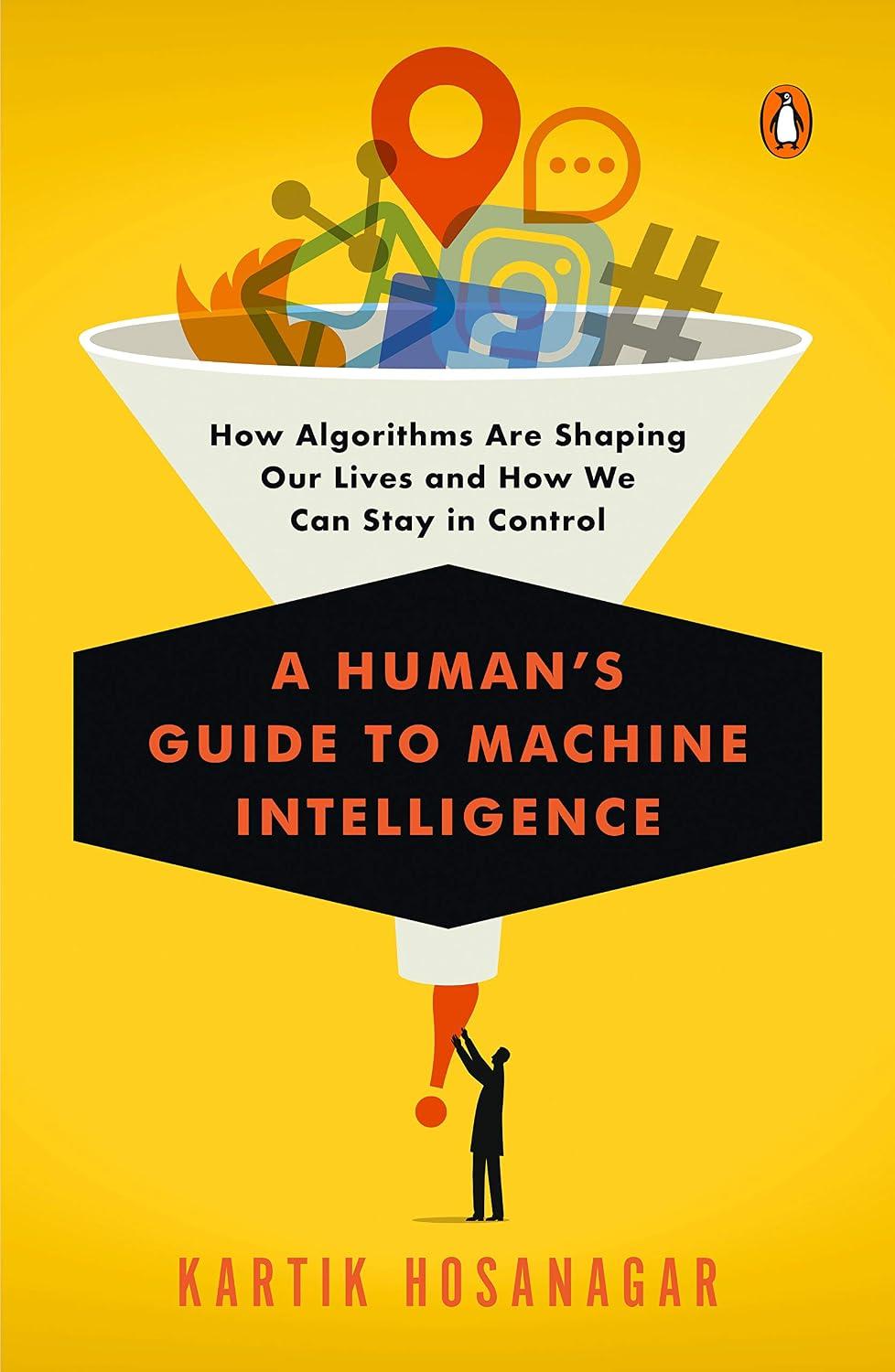
As an Amazon Associate WSB earns from qualifying purchases.
Bring This Speaker to Your Stage
Tell us about your event and our team will confirm availability and fees right away.