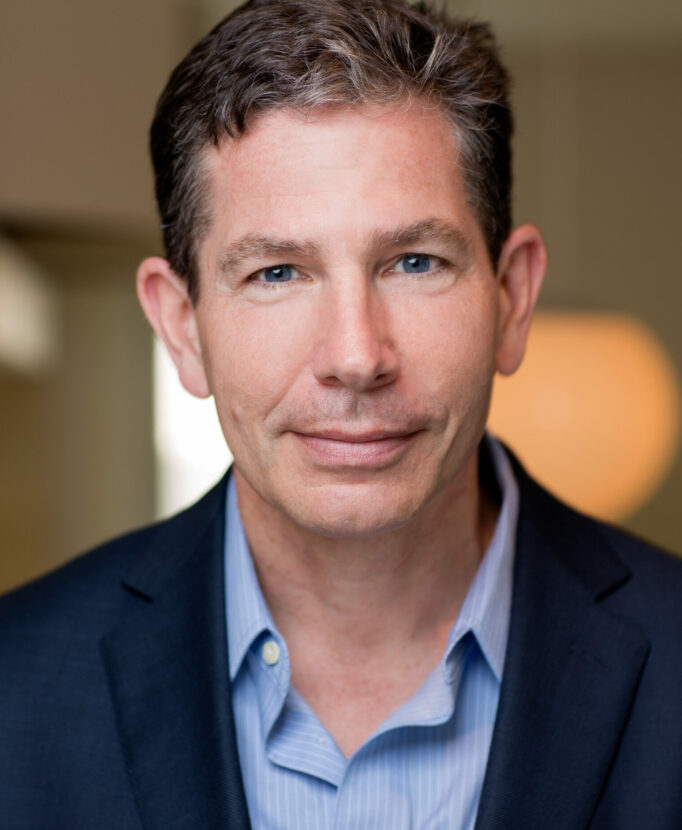
Joel Selanikio
Keynote Speaker
Principal at FutureHealth; Attending Physician at Georgetown University; Formerly CEO and co-founder at Magpi
A practicing physician, former CDC epidemiologist, and technology entrepreneur, Joel Selanikio challenges healthcare boards and executive leadership to confront a counterintuitive truth: healthcare is simultaneously getting better and getting smaller. Drawing on firsthand experience in clinical medicine, global health innovation, and crisis response, he gives leaders a clear framework for navigating disruption before it arrives.
Request Availability
Contact WSB for Joel Selanikio's speaking fee
Joel Selanikio, MD stands at a rare intersection: practicing physician, former CDC epidemiologist, technology entrepreneur, and crisis responder — a combination that gives him a perspective on healthcare’s future that few speakers can match.
His central argument is counterintuitive and urgent: healthcare is simultaneously getting better and getting smaller. GLP-1 medications are eliminating entire service lines. Consumer devices now diagnose conditions that once required specialist visits. AI is handling clinical decisions that previously demanded appointments. The forces reshaping healthcare aren’t coming from inside health systems — they’re arriving from outside, and most leaders aren’t watching the right indicators.
A TED speaker who has addressed audiences at Davos, MIT, Stanford, Google, and the American Hospital Association, Dr. Selanikio has been profiled by The Economist, the Wall Street Journal, Wired, Forbes, the BBC, and NPR. He is the winner of both the $100,000 Lemelson-MIT Award for Sustainable Innovation and the Wall Street Journal Technology Innovation Award for Healthcare.
Joel Selanikio’s Speech Topics
-
Stop Asking the Wrong Question About AI and Healthcare
The conventional debate asks whether AI will replace physicians. It’s the wrong question. The right question: can a less-expensive human — a nurse practitioner, pharmacist, technician, or informed consumer — equipped with AI do what doctors currently do? The answer is obviously yes, and it’s already happening. This talk moves past the replacement debate to what actually matters for healthcare leaders: as clinical tasks migrate to lower-cost humans and consumers armed with AI, what happens to revenue streams, workforce models, and institutional roles? Audiences leave with a practical framework for anticipating task migration and repositioning their organizations ahead of the shift.
-
Doctor You: The Migration from Exam Room to Living Room
Smartwatches detect atrial fibrillation. AI interprets lab results. Direct-to-consumer platforms prescribe medications without a physician visit. The migration of clinical capability from exam rooms to consumer devices is already underway — and accelerating. This talk gives healthcare leaders a clear map of which capabilities are migrating, how fast, and what it means for patient volume, revenue, and institutional relevance. The question is no longer whether patients will become self-navigators — they already are. The question is whether health systems will find new value in a post-gatekeeper era or be left managing what consumers can’t yet handle themselves.
-
Better and Smaller: The Coming Healthcare Demand Collapse
For the first time in modern history, healthcare faces not just disruption from competitors — but the elimination of demand itself. GLP-1 medications are removing entire service lines. Autonomous vehicles will empty trauma bays. AI is handling clinical decisions that once required appointments. This talk gives healthcare boards and executives a clear framework for understanding which service lines are most vulnerable, which forces are accelerating the collapse, and what a sustainable institution looks like on the other side. Leaders who understand these forces now will be positioned to adapt; those who don’t will be managing a slow decline.
-
Crisis Thinking: What Emergencies Reveal About Leadership
Most leadership training prepares you for the normal. Crises aren’t normal. Drawing on firsthand experience leading clinical operations during the Ebola epidemic in Sierra Leone, serving as Chief of Operations for the HHS Emergency Command Center after 9/11, and consulting to FEMA and DC Health during COVID-19, this talk examines how institutions make decisions under radical uncertainty — incomplete information, collapsing assumptions, no time for consensus. What separates organizations that adapt from those that freeze? How do leaders maintain trust when the situation keeps changing? And what do crisis-tested models of resilience look like when applied to the slower-moving disruptions healthcare faces today?
Joel Selanikio Topics & Types
REQUEST AVAILABILITY
Tell us about your event and the speaker you are interested in booking and we will be in touch right away.