Gad Allon
Partnership with Wharton Business School
Jeffrey A. Keswin Professor, The Wharton School; Co-founder and Chief Science Officer, AIC
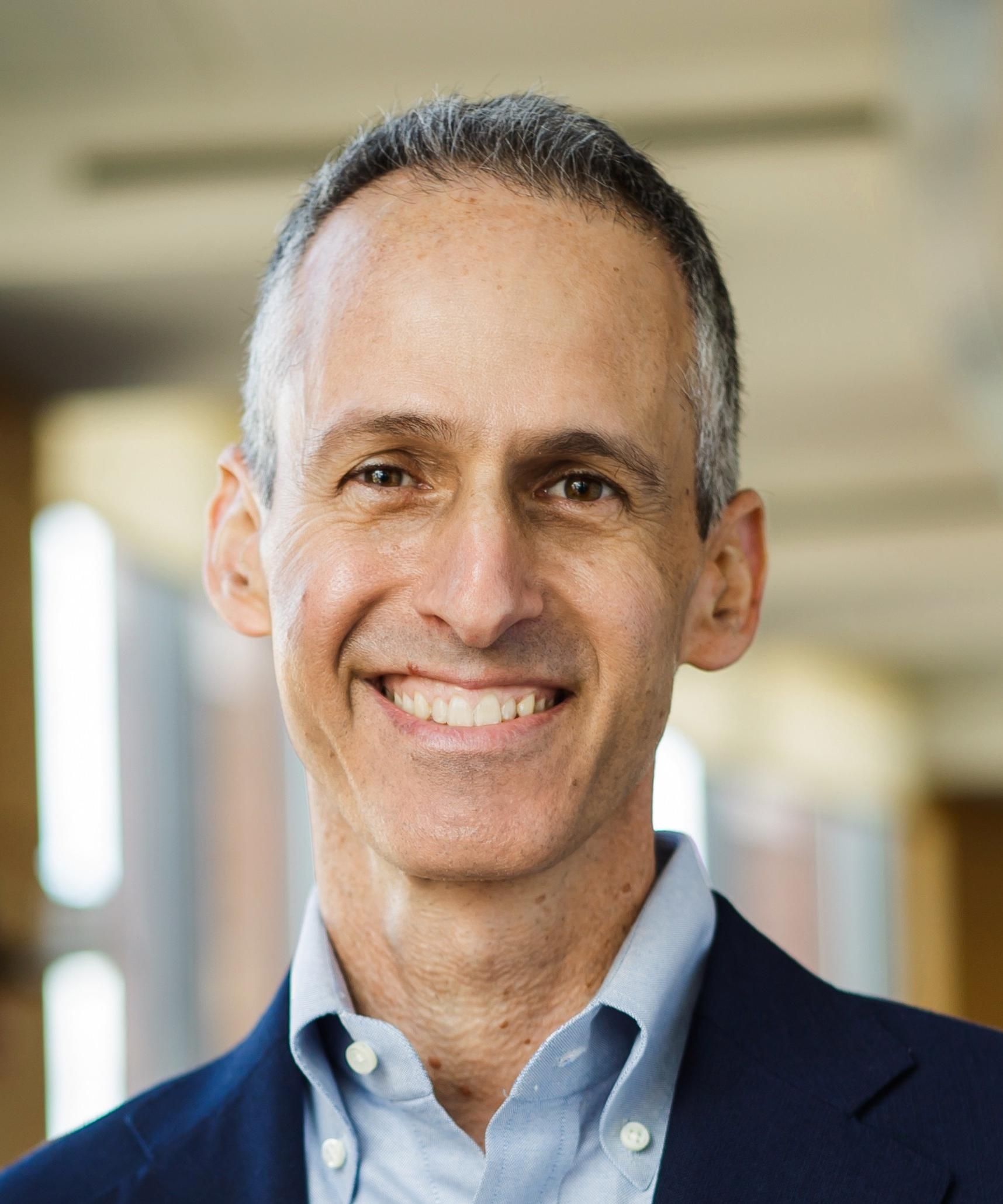
Growing and scaling sound like the same thing, but one adds revenue and the other builds the company that can carry it. Gad Allon has spent twenty years on that difference, from the Wharton classroom to the factory floors his own company now runs. He shows audiences how to tell the two apart in their own business, what to clear out of the way, and how to grow without breaking what already works.
Web
Gad Allon studies what happens to an organization as it gets bigger, and he has been on both sides of it. He is a scholar by training and an operator by choice. He co-wrote the textbook other business schools teach the subject from, then went and bought the factories where the theory has to hold. His mantra is blunter than most: what brought us here will be the main constraint on taking us there. An organization optimizes itself for the size it used to be, and none of that arrives by a bad decision. It arrives one reasonable decision at a time. The work at the next stage is less about learning something new than about undoing what is already there.
What he tells a team in the middle of fast growth is that the strain is not evidence something is broken. Organizations grow from crisis to crisis by design, and he counted three in his own startup on a single day. The harder case is the comfortable one. He met a chief executive recently who asked why anything needed to change when the company had been growing twenty percent a year. The investor wanted a hundred percent, and the culture built for twenty was not ready for it. His SCALE framework is how he walks an organization through that conversation.
He is not describing American manufacturing from a distance. His company buys the firms that make the sensors, actuators, and power supplies that robots and autonomous machines run on, then rebuilds how they operate with AI. From inside those plants, his conclusion is not the one in the headlines: the United States did not lose the workforce; it lost the workflow. In Shenzhen, a company can describe a part in the morning and hold the prototype that evening, with a hundred units landing in San Francisco two weeks later. Nothing here works that way yet, and closing that gap is what his company does all day.
The work travels. Through Wharton Executive Education, he teaches scaling to senior teams from the world's largest industrial and technology companies. The frameworks are industry agnostic by design. He has taught the senior team of an aerospace company using a case about a drive-through restaurant chain and watched them recognize themselves in it. He ran Penn's joint Wharton and engineering degree for ten years, and in 2026, the university gave him its Lindback Award, its highest honor for teaching. His newsletter takes a company out of last week's news and goes several levels deeper than the rest of the coverage.
WHY AUDIENCES WILL BE BETTER OFF
- Audiences leave ready to say whether they are scaling or only getting bigger and what will constrain their next stage.
- Audiences leave with a list of the rules written for an organization that no longer exists and a decision about which come out first.
- Audiences leave able to say whether they have a competitive moat or only a brand and which of the two they have been funding.
- Audiences leave putting two questions to their AI plan: where their next senior people come from and what changes when the customer is software.
- Audiences leave rethinking growth around one standard: build the company that can carry it before it arrives.
Gad Allon’s Speech Topics
Supply Chain Strategy for Three Possible Worlds: Tariffs, Reshoring, and AI
The supply chain question used to be the pandemic. Now it is tariffs, and Allon's answer is a discipline rather than a forecast. Three worlds are possible: trade fully regionalized, a return to roughly what it was, and tariffs lower than today's. He asks which one an organization is built for, what the other two would cost, and tests the answer against the plants his own company runs. His verdict on reshoring: America has excellent engineering and poor manufacturing, because those plants' customers never asked them to be good at it. Audiences leave with a scenario plan they can build this quarter, and a clear read on what AI can and cannot fix on a factory floor.
Two Questions to Put to Your AI Plan: Talent, Customers, and What Changes First
Allon will not tell an organization which AI vendor to buy from. Before he presents to a chief executive, he spends the drive having two AI models play that executive back at him. Then he asks a room the harder version: if you are not doing that before you bring in your consultants, what are you even doing? He asks where an organization's own senior people come from once software does the first two years of the job, because third-year accountants do not grow on trees. He asks what is left of a website that a customer's software visits and the customer does not. Audiences leave with both questions put to their own plan, and with the standard he sets for anyone who wants to lead this rather than delegate it.
Your Brand Is Not a Moat: Competitive Advantage in the Age of AI
Your brand is not a moat, and Allon says so to rooms that would rather hear otherwise. Most organizations who believe they have a competitive advantage are describing something a competitor can copy. He uses the smile curve, from Acer founder Stan Shih, to show that defensibility sits at the customer end of a value chain or the research end, rarely the middle. His case is Nvidia, which had no moat for twenty years and then built one on purpose, next to the companies that did the same and were not lucky. Audiences leave able to say what actually protects their business, what only feels like it does, and where AI is dissolving the difference.
Take the Rules Out: Culture, Process, and Keeping Speed as You Grow
The instinct of his field is to add process. Allon removes it. Rules work for a quarter: everybody is clear, the organization speeds up, and then everything needs an SOP and it is slower than it started. His alternative is culture treated as decision-making infrastructure, not a values poster, because the point is that people make the right call when no senior person is in the room. His example is Pal's Sudden Service, a Tennessee drive-through chain that won the Baldrige Award with teenage employees who train a hundred hours before touching a burger. Audiences leave able to separate the rules that still earn their place from the ones holding the organization at its old size.
Scaling Without Breaking the Business
Getting bigger and scaling are not the same thing. Allon's SCALE framework looks at what will constrain the next stage, whether the organization is aligned and well led, and whether there is a predictable path to profitability. One piece is who is in the building. An organization needs bushwhackers who like the absence of a map, then drivers who can follow one, then people who run a faster lap than anybody alive. The three cannot stand each other, and his read is that most large technology companies have lost the first kind, which is why firms like Palantir and OpenAI outrun them. Audiences leave able to run the framework on their own organization and decide what has to change in how it operates, before growth forces the change.
What other organizations say about Gad Allon
Gad Allon was just phenomenal. I recommend his program to anyone looking to take their business to the next level.
Financial Services
Featured News
Substack
From Bushwackers to F1 Drivers: Evolving Employee Types as Startups Scale
2 February, 2026
Bring This Speaker to Your Stage
Tell us about your event and our team will confirm availability and fees right away.