Looking Ahead: Thinking about Possible Futures
18 January, 2023 · Vikram Mansharamani
Acclaimed global trend-watcher and futurist Dr. Vikram Mansharamani shares his insights about global developments that might affect our world in the next five years.
Navigating today’s overwhelming uncertainty is daunting challenge filled with unanticipated developments. As Yogi Berra wisely noted, “it’s tough to make predictions, especially about the future.” Yet while it’s true we can’t predict the future, that doesn’t mean the future has to surprise us. You see, after decades of helping some of the world’s largest companies make tough decisions, I’ve learned that it’s really imagination and broad, zoomed-out thinking that leads to the best decisions.
For the past decade, I’ve made a regular effort to congeal my thinking about the future in the form of “predictions” of global developments to watch and have posted them publicly since 2015. Some have been spot on, others wildly off. But the point of the exercise is not accuracy, but usefulness—usefulness in spurring thoughts about how the future might unfold. Many of my clients and students now regularly make their own lists, and have found the mere exercise of contemplating possible developments useful.
And so at this time of year, when it’s traditional to think about the future, I wanted to share five global developments (out of the 23 that I share in this year’s annual piece) that have the potential to impact all of us. While the full list includes topics like earth-bound asteroids, comprehensive immigration reform, the genocide taking place in Western China, the future of energy, and the boom in edible insect demand, I’ve opted to highlight developments in 1) culture, 2) healthcare, 3) geopolitics, 4) macroeconomics, and 5) technology.
- Corporate America, after enduring a never-ending stream of Diversity Equity and Inclusion (DEI) reporting requirements, pushes back against quota-driven standards. DEI 2.0 rises from the ashes and focuses on Diversity (of perspective), Equality (of opportunity), and Incentives (to do well).
- America’s healthcare infrastructure begins to bifurcate into “contagious” and “non-contagious” ecosystems; offices, hospitals, and urgent care facilities are duplicated to disrupt what public health professional determine to be one of the most powerful vectors through which diseases spread: treatment facilities.
- As countries seek to secure needed commodities to power their economies and support their electrification goals, geopolitical vulnerabilities lead governments to increasingly mandate recycling and fund non-traditional mining endeavors. Japan emerges as the leading miner of commodities in outer space.
- Following a downgrade of United States debt, the entire world begins to question America’s ability to repay the money its borrowed; nervous investors flock to safe assets, with US treasuries still thought by all to be the safest, ironically leading to a surge in prices and plunge in yields. The US dollar weakens, American exports boom, and the Chinese label the United States a currency manipulator.
- As the US Government increasingly does business with surveillance capitalists such as Google and Amazon, constitutional scholars suggest the Fourth Amendment applies to these “extensions of the government” and their unreasonable search and seizure of personal data is a violation of the law. After being purchased at an enormous valuation by a company linked to Moscow, BeReal is seen as a threat comparable to TikTok.
John Kenneth Galbraith has eloquently noted the essence of those who attempt to predict the future. There are, he notes, two types: “those who don’t know, and those who don’t know they don’t know.” Feel free to decide which you think I am, but I do hope the act of even thinking about potential developments forces you to think differently about how the future may unfold!
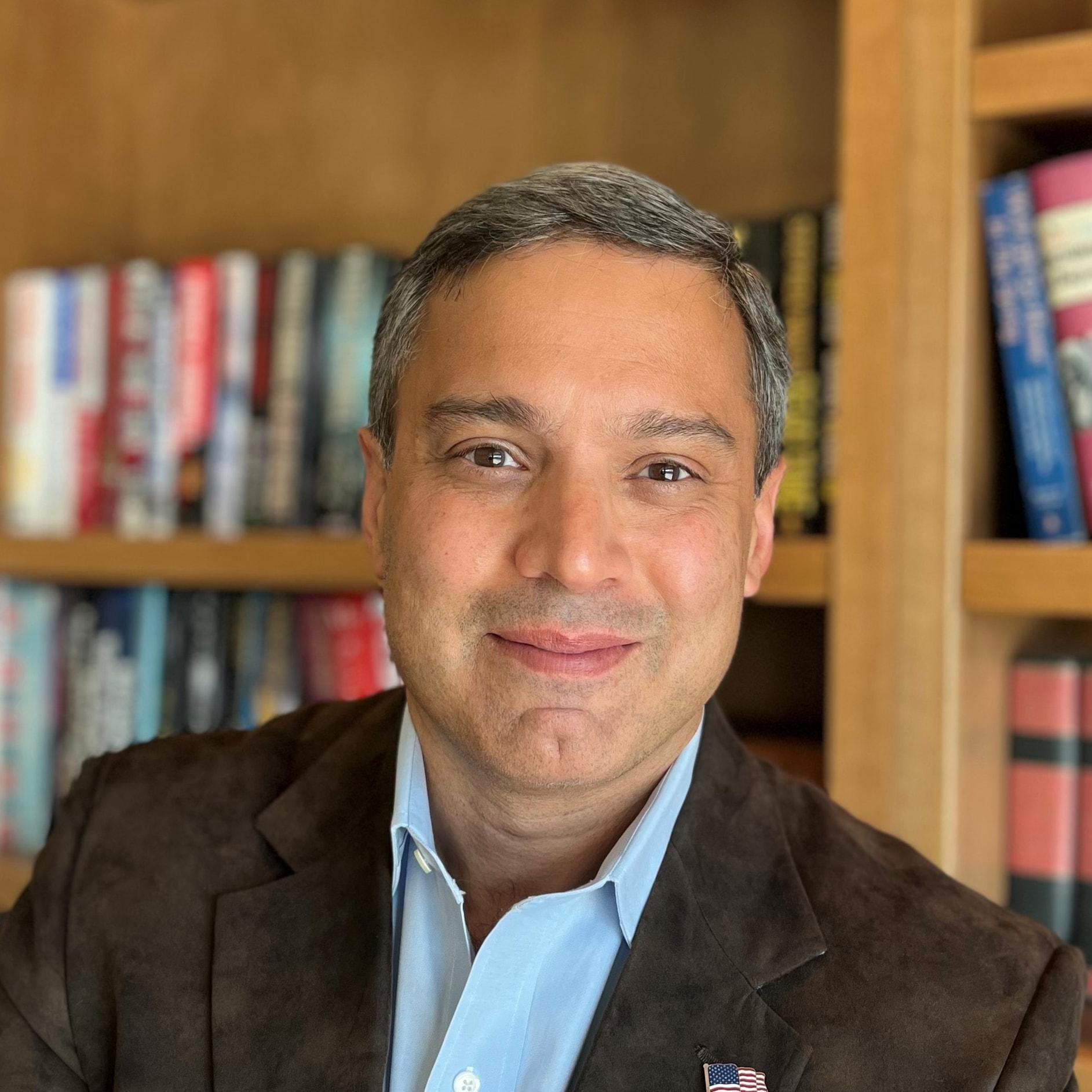
Vikram Mansharamani
Vikram Mansharamani is an entrepreneur, consultant, scholar, neighbor, husband, father, volunteer, and professional generalist who thinks in multiple dimensions and looks beyond the short-term. Self-taught to think around corners and connect original dots, he spends his time speaking with global leaders in business, government, academia, and journalism. He practices what he preaches and is currently the CEO of Goodwell Foods, a frozen pizza manufacturer. LinkedIn has twice listed him as its #1 Top Voice in Money & Finance, and Worth profiled him as one of the 100 Most Powerful People in Global Finance. Vikram earned a PhD from MIT, has taught at Yale and Harvard, and is the author of three books: The Making of a Generalist: An Independent Thinker Finds Unconventional Success in an Uncertain World, Think for Yourself: Restoring Common Sense in an Age of Experts and Artificial Intelligence, and Boombustology: Spotting Financial Bubbles Before They Burst. Vikram lives in Lincoln, New Hampshire, with his wife and two children, where they can usually be found hiking or skiing, and if he's not there, you might try looking for him at the craps tables in Vegas (seriously).