
Oriana Skylar Mastro
Oriana Skylar Mastro – Remaking the Indo-Pacific
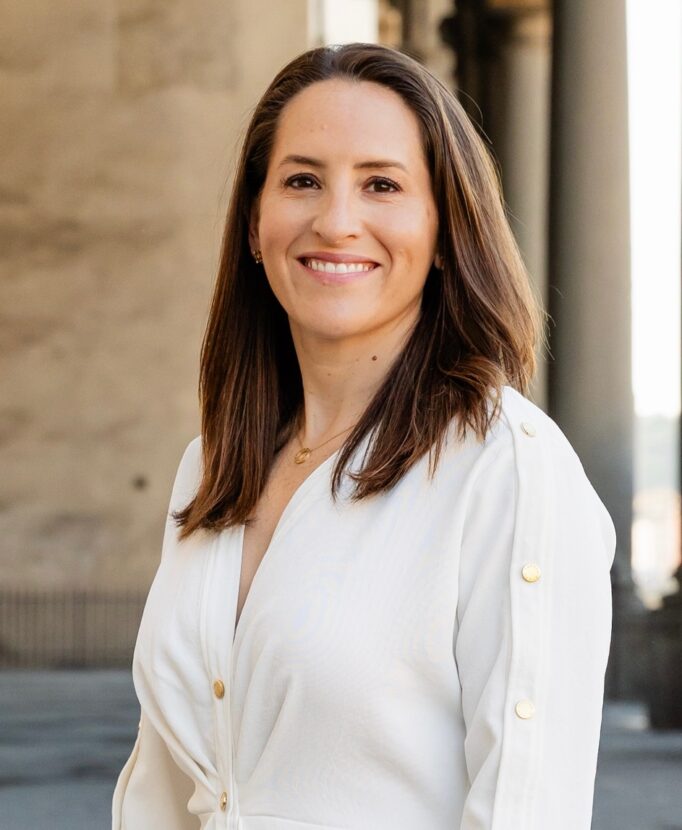
Keynote Speaker
Director of the Indo-Pacific Policy Lab, Stanford’s Freeman Spogli Institute; Deputy Chief of Reserve China Global Strategy, the Pentagon; Nonresident scholar, the Carnegie Endowment for International Peace; Member of the Council on Foreign Relations
Dr. Mastro is a leading expert on U.S. grand strategy and U.S.-China relations. Mastro is a Stanford political scientist with a Princeton Ph.D., an active U.S. Air Force Reserve officer serving as Deputy Chief, Reserve China Global Strategy at the Pentagon, and a regularly-consulted advisor at the highest levels of the U.S. government.
Contact WSB for Oriana Skylar Mastro's speaking fee
Dr. Mastro is a Stanford professor, geopolitical consultant, and military strategist with a focus on Chinese military and security policy, Asia-Pacific security issues, war termination, and coercive diplomacy. She recently launched the Indo-Pacific Policy Lab at the Freeman Spogli Institute for International Studies at Stanford University and in her current role as Deputy Chief of Reserve Global China Strategy at the Pentagon, she won officer of the year for the third time for her contributions to national security. Her newest book, Upstart: How China Became a Great Power, recently won the silver medal in international business/globalization.
Oriana Skylar Mastro – Brussels Indo-Pacific Dialogue
Oriana Skylar Mastro- A Shifting Global Order?
Oriana Skylar Mastro – Global Threats Today
Oriana Skylar Mastro – Remaking the Indo-Pacific
Oriana Skylar Mastro – Remaking the Indo-Pacific
Why does China act the way it does—and where is it headed next? Drawing on Chinese-language sources, fieldwork in Asia, and her own military experience, Dr. Mastro takes audiences inside Beijing’s strategic mind: the Communist Party’s drive to stay in power, Xi Jinping’s vision of national rejuvenation, and how China’s patient “hide and bide” era gave way to today’s assertiveness. She translates Beijing’s long game into the signals that matter for leaders—how policy, regulation, and military posture will shape the operating environment. Audiences leave with a durable framework for anticipating China’s moves and stress-testing their own China strategy against them.
How did China rise so far, so fast—and what can leaders learn from how it competes? In this talk based on her award-winning book Upstart, Dr. Mastro reveals the unconventional playbook behind China’s ascent: rather than imitating the United States head-on, Beijing pursued advantage where rivals weren’t looking, exploited gaps in the global order, and emulated the leader only when it paid to. She shows how this strategy of entrepreneurship, exploitation, and emulation reshaped global markets, supply chains, and industries—and where it is being deployed next. Audiences leave with a fresh lens on competitive strategy and on the disruptive challenger reshaping their sector.
Is war over Taiwan inevitable—and what would it do to the global economy? Dr. Mastro, whose Foreign Affairs essay “The Taiwan Temptation” reframed the debate, lays out in plain terms why Beijing’s calculus has shifted and what a conflict would actually look like, from blockade to amphibious assault. She assesses whether the People’s Liberation Army could win, what genuinely deters Xi Jinping, and why several popular “solutions” would backfire. Crucially for business audiences, she translates the scenarios into concrete exposure—semiconductors, shipping lanes, and supply-chain risk—so leaders can pressure-test continuity plans against the world’s highest-stakes flashpoint.
U.S.-China relations have reached an all-time low, and the fallout lands directly on companies. Dr. Mastro maps the three battlegrounds defining the rivalry: economic (tariffs, export controls, and the race for semiconductors and AI), military (China’s modernization and Taiwan), and political (resilience and information manipulation). She explains how the second Trump administration’s push to decouple is rewiring global supply chains, what Beijing’s strategy of competition really looks like, and where each policy choice carries hidden costs. Audiences leave with a clear-eyed read on where the relationship is heading and a practical sense of how strategic competition is reshaping markets, supply chains, and investment risk.
The world’s authoritarian powers are drawing closer—and Dr. Mastro explains what it means for global stability and the businesses exposed to it. Drawing on her research on Sino-Russian military cooperation and her latest Foreign Affairs essay on the deepening Russia–North Korea partnership, she reveals how these regimes build one another’s war machines without formal alliances—trading weapons, technology, energy, and battlefield experience. She separates genuine coordination from hype, identifies the fault lines Washington can exploit, and explains why deterring one of these powers now means reckoning with all of them. Audiences leave with a sophisticated map of the axis and its implications for sanctions, energy, and supply-chain risk.
How does the U.S. operate as a global military power? What do evolving technologies like AI, semiconductors, and dual-use innovation mean for the future of conflict? How are global conflicts reshaping the political landscape? Covers ongoing conflicts in China/Taiwan, Ukraine, Venezuela, Russia, Iran, North Korea, the Middle East and how the U.S. is involved. Audiences should expect to leave with a well rounded understanding of the U.S. role in current conflicts and how adversaries benefit or learn from the wars the US fights. Covers the U.S. role in current global conflicts, the future of U.S. global strategy, and the U.S. role in the technology race.
Tell us about your event and the speaker you are interested in booking and we will be in touch right away.